
How do the ideas connect?
Examine the expectations, prerequisites and connections that give a learning sequence its structure.
Curriculum services · In development
We’re developing curriculum analysis that brings standards,
mathematical thinking and instructional design into focus.
What we’re exploring
The task. The thinking.
The connections between them.
Our approach is being designed to examine how materials develop understanding, connect ideas, support teaching and give students opportunities to apply their learning.
We’re building the review process and report experience together, with clarity and useful next steps at the center.
Questions worth asking
Examine the expectations, prerequisites and connections that give a learning sequence its structure.
Look at conceptual understanding, procedural skill, fluency, application and opportunities to reason.
Consider teacher guidance, learner supports and the relationship between instruction and assessment.
Let’s talk curriculum
Tell us what you’re working on and what you’d like to understand. Scope and availability are discussed individually.
Inside a review
Explore six lessons from Mathematics Vision Project’s openly licensed Linear & Exponential Functions module.
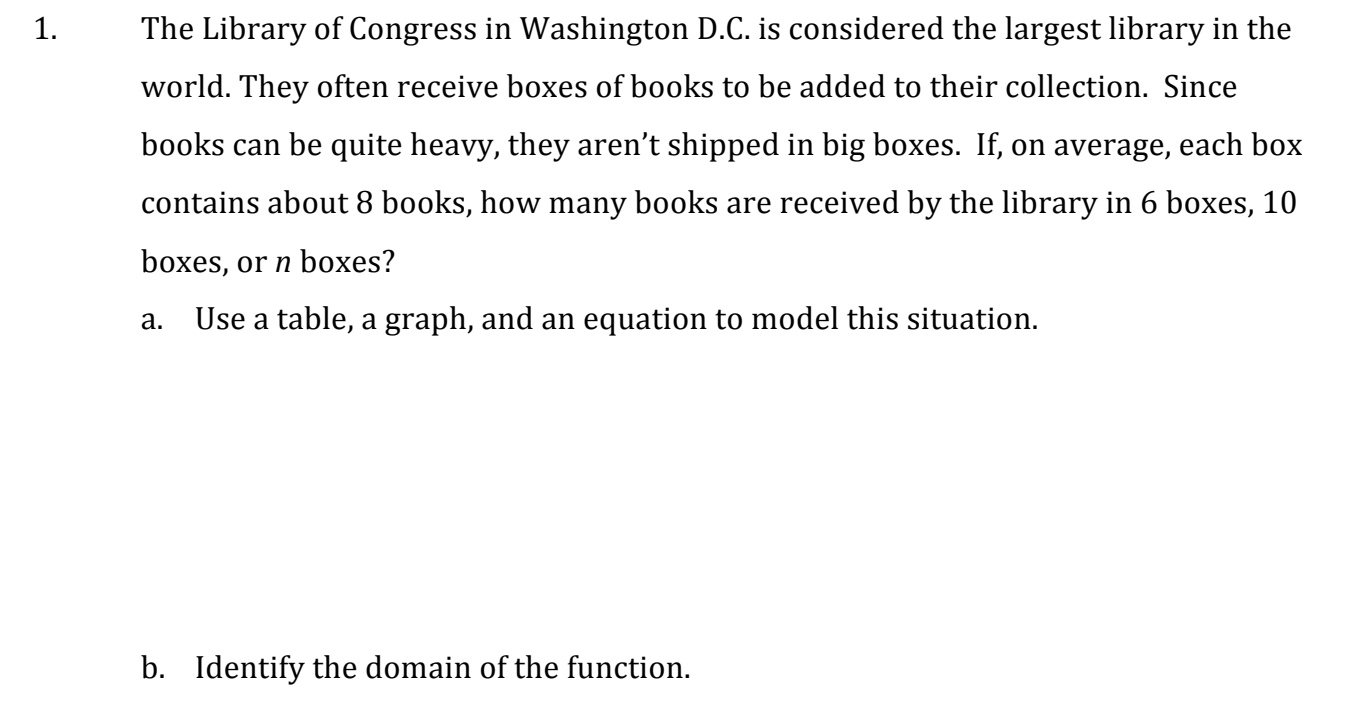 Lesson 2.2 ↗
Context matters
A books-in-boxes task connects the domain of a function to its context. See the task alongside the teacher guidance.
See the finding ↗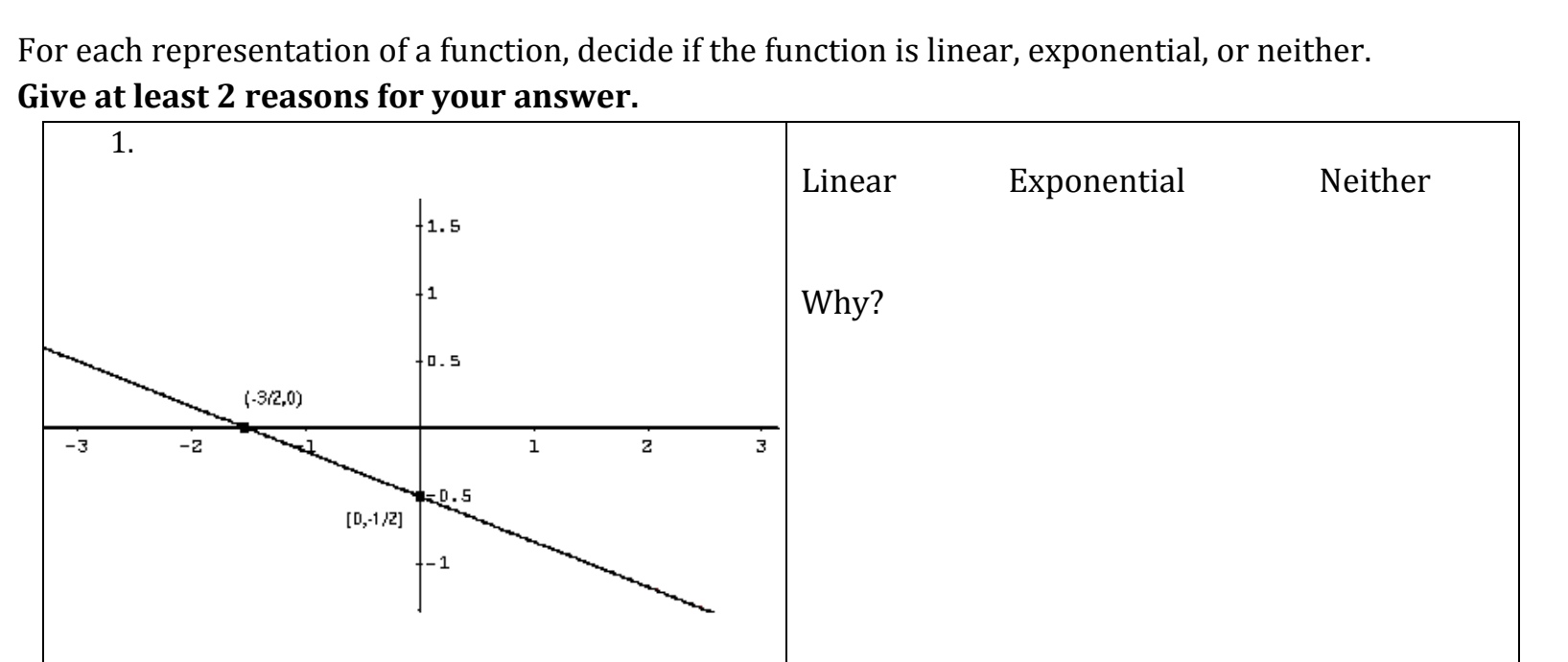 Lesson 2.3 ↗
Evidence you can inspect
Students classify functions and explain why. Follow the observation back to the exact task excerpt.
See the finding ↗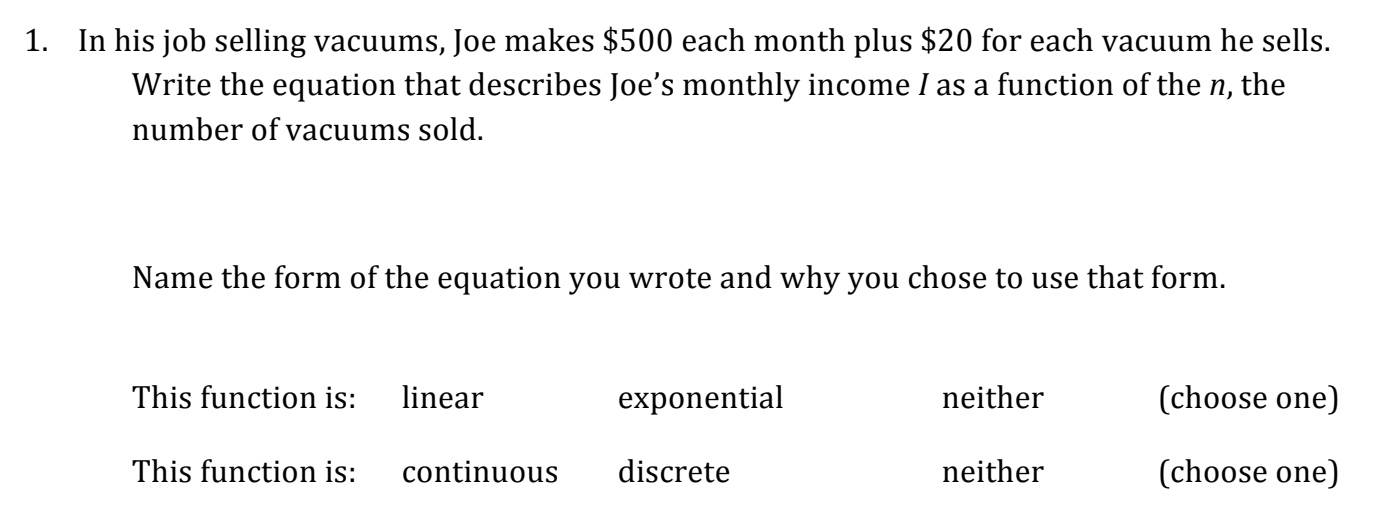 Lesson 2.6 ↗
Claims with clear limits
The review distinguishes an equation-form choice from evidence of strategic tool use.
See the finding ↗Original task: Mathematics Vision Project, 2016 · CC BY 4.0. Review covers six lessons from matched student and teacher editions.